Minimally Invasive Bypass Surgery
& Keyhole Heart Surgery
Minimally invasive cardiac surgery (MICS), or keyhole heart surgery, lets Prof. Dr. Shahrul Amry Hashim perform bypass and heart valve operations through a 3–7 cm incision between the ribs, without splitting the breastbone. Compared with traditional open-heart surgery this generally means less pain, smaller scars and a faster return to daily life.
What Is Keyhole Heart Surgery and Why Does It Matter?
Minimally Invasive Cardiac Surgery (MICS), known in Bahasa Malaysia as Pembedahan Jantung Lubang Jarum or Bedah Lubang Jarum, is a surgical approach that allows complex heart operations to be performed through a small keyhole incision between the ribs, rather than cutting through the breastbone (sternotomy).
In traditional open-heart surgery, the sternum (chest bone) must be split, a procedure called a sternotomy, creating a 20–25 cm wound that requires months to fully heal. MICS changes this fundamentally: the surgeon accesses the heart through a carefully placed 3–7 cm incision between the ribs, guided by camera assistance and specialised instruments.
The surgical outcome, whether a bypass graft, a repaired valve, or a closed congenital defect, is the same. The difference is in how the patient experiences recovery: less pain, a much smaller scar, a shorter hospital stay, and a faster return to daily life.
This approach has been standard practice in leading cardiac centres across Germany and Europe for over two decades. Prof. Dr. Shahrul Amry Hashim has championed its introduction and adoption in Malaysia, and today leads one of the most active MICS programmes in private Kuala Lumpur.
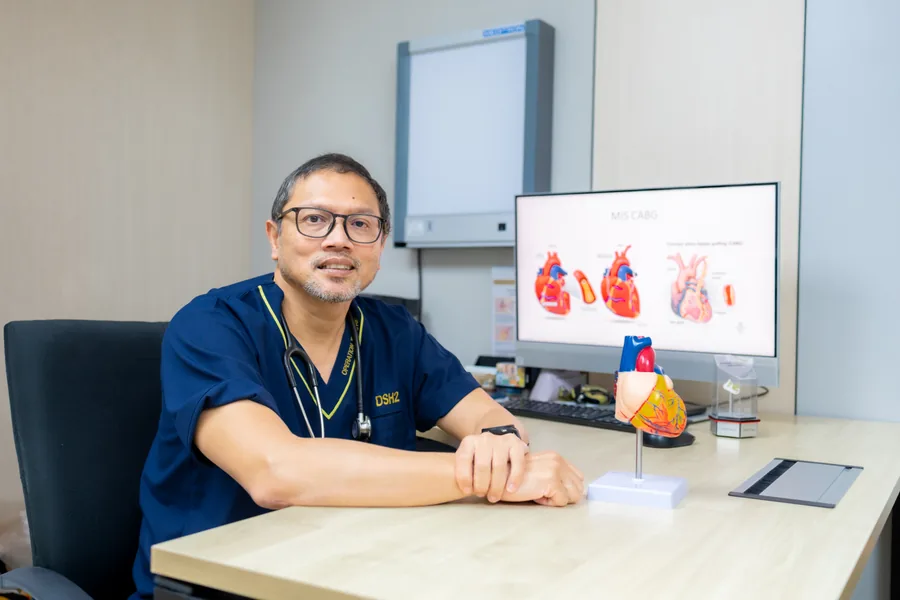
Pembedahan Jantung Lubang Jarum / Bedah Lubang Jarum
Bypass (CABG)
Pembedahan Bypass Jantung / Bypass Lubang Jarum
How Does Keyhole Surgery Compare to Open-Heart Surgery?
The same cardiac procedure, two very different experiences. Ask Prof. Shahrul whether the keyhole approach is right for your case.
Who May Be a Candidate for Keyhole Heart Surgery?
Suitability for MICS depends on your individual diagnosis, anatomy, and overall health. Prof. Shahrul assesses each patient's case individually. The following conditions may generally be addressed using a minimally invasive approach.
Coronary Artery Disease
Triple vessel disease (TVD), LAD disease, or multi-vessel coronary artery disease (IHD) requiring bypass surgery (CABG) may be suitable for the keyhole approach.
Valve Disease
Mitral stenosis, mitral regurgitation, aortic stenosis, aortic regurgitation, and tricuspid regurgitation may be addressed through minimally invasive valve repair or replacement.
Congenital Heart Defects
Atrial septal defects (ASD), ventricular septal defects (VSD), and coronary fistulas, in both adult and paediatric patients, may be repaired using keyhole techniques.
Lung Conditions
Lung cancer, spontaneous pneumothorax, thymoma, lung metastases, and lung sequestration may be treated using VATS (video-assisted thoracoscopic surgery).
Second Opinion Cases
If you have been told you need open-heart surgery, Prof. Shahrul can assess whether a minimally invasive alternative may be appropriate for your specific case.
Not Sure? Book an Assessment
Every case is different. The only way to know if keyhole surgery is suitable for you is a personalised consultation with Prof. Shahrul.
Book Consultation →Procedures Performed Using MICS at KPJ DSH2
Prof. Shahrul's MICS programme at KPJ Damansara Specialist Hospital 2 covers a broad range of cardiac and thoracic procedures.
1. Minimally Invasive Bypass Surgery (MICS CABG)
The flagship procedure. Using a 3–7 cm keyhole incision between the ribs, no sternotomy (no chest bone splitting), Prof. Shahrul performs coronary artery bypass grafting (CABG) to reroute blood flow around blocked coronary arteries. This is one of the most technically demanding procedures in cardiac surgery, and Prof. Shahrul actively performs MICS CABG with published research supporting the approach.
2. Minimally Invasive Valve Surgery
All major valve procedures, repair and replacement, can be performed through a keyhole incision. Valve repair is generally preferred over replacement where anatomically feasible, preserving the patient's natural tissue and reducing the need for long-term anticoagulation.
3. Minimally Invasive Congenital Heart Surgery
Congenital heart defects, including hole-in-the-heart conditions, can be addressed using keyhole techniques in both adult and paediatric patients, avoiding the need for open-chest surgery.
4. Minimally Invasive Lung Surgery (VATS)
Video-assisted thoracoscopic surgery (VATS), Pembedahan Paru-Paru Lubang Jarum, allows lung procedures to be performed through small keyhole incisions using a miniature camera. This minimally invasive approach to thoracic surgery typically results in faster recovery and less post-operative pain than open thoracotomy.
5. Complex & Emergency Cardiac Surgery
For patients requiring high-complexity or emergency cardiac surgery, Prof. Shahrul and the DSH2 Heart & Lung Centre provide a comprehensive surgical programme covering redo and emergency cases.
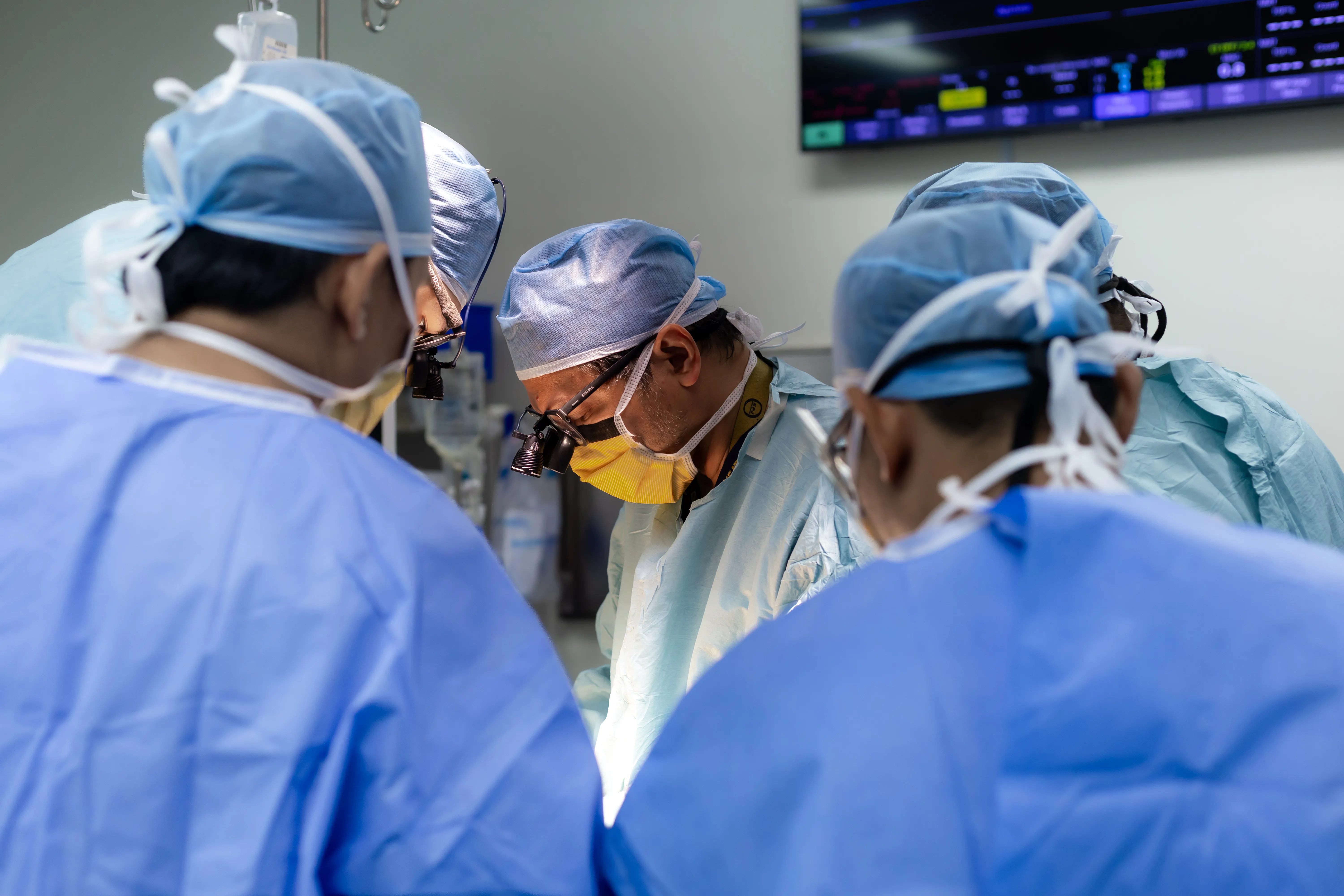
The Keyhole Surgery Journey: Step by Step
From your first consultation to full recovery, here is what the MICS process typically involves.
What Technology Is Used for Keyhole Surgery?
KPJ Damansara Specialist Hospital 2 is equipped with state-of-the-art technology designed to support minimally invasive cardiac and thoracic surgery.
Hybrid Cath Lab
Biplane angiography capabilities allowing complex cardiac imaging and hybrid procedures combining interventional cardiology and cardiac surgery in a single setting.
Da Vinci Xi Surgical Robot
The Da Vinci Xi robotic surgical system supports precision minimally invasive procedures with enhanced 3D visualisation and multi-joint instrument control.
Digital Operating Theatres
7 state-of-the-art Digital Operating Theatres with integrated advanced imaging, lighting, and surgical systems, designed for complex cardiac and thoracic procedures.
Cardiac ICU (10 Beds)
Dedicated 10-bed Intensive Care Unit for post-operative cardiac monitoring, staffed by a specialist multidisciplinary team with 24-hour consultant cover.
Mayo Clinic Care Network
DSH2 is the first hospital in Malaysia admitted to the Mayo Clinic Care Network, providing access to Mayo Clinic expertise, protocols, and knowledge-sharing resources.
JCI Accreditation
Joint Commission International (JCI) accreditation, the gold standard of international healthcare quality and patient safety, ensuring the highest standards of clinical care.
Not Sure If You Need Surgery?
If you have been told you require open-heart surgery and would like to explore whether a minimally invasive approach is possible, Prof. Shahrul offers expert second opinion consultations. He will review your existing reports, angiogram, and imaging, and give you a clear, honest assessment of all your surgical options.
Download Patient Leaflets
Clear, easy-to-read guides for patients and families. Download and read before your consultation.
Minimally Invasive Bypass Surgery
A patient guide to keyhole bypass surgery (MICS CABG), what to expect, how it works, and your recovery journey.
Download PDFValve Repair & Replacement
A patient guide to minimally invasive valve surgery, mitral valve repair, aortic valve replacement, and what the procedure involves.
Download PDFPatient FAQ: Minimally Invasive Heart Surgery
Find Out If Keyhole Heart Surgery Is Right for You
Book a consultation with Prof. Dr. Shahrul Amry Hashim. Bring any existing cardiac reports, angiogram results, or echocardiogram imaging. Consultations available within days.
Reviewed by Prof. Dr. Shahrul Amry Hashim, Consultant Cardiothoracic Surgeon, KPJ Damansara Specialist Hospital 2. Last reviewed: September 2026.